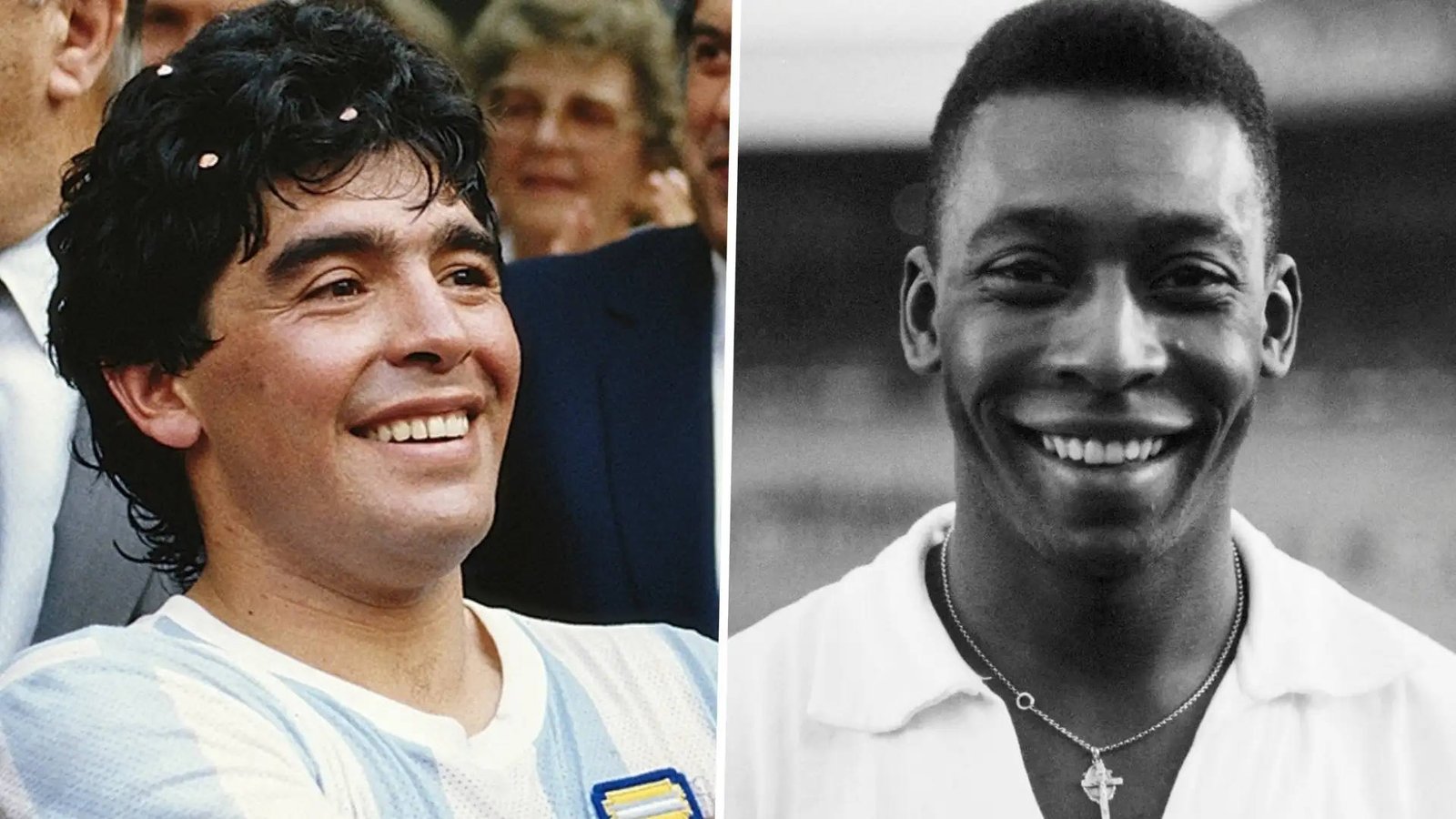
Almost every football debate about the greatest player of all time eventually traces back to two names from two different eras: Pelé and Diego Maradona. Comparing them fairly means understanding just how different the football they played actually was.
Pelé: the complete forward of a physical era
Pelé won three World Cups with Brazil, a record that remains unmatched, contributing directly to titles in 1958, 1962, and 1970. He played in an era with far less protection for skilful attackers — tackles that would draw an automatic red card today were often allowed to continue — and his ability to combine physical resilience with technical brilliance is part of what made him so difficult to stop. His scoring numbers, even accounting for the less rigorous record-keeping of the period, remain extraordinary by any modern standard.
Maradona: the individual moment that decided a tournament
Maradona's case rests heavily on a single, remarkable month: the 1986 World Cup, where he was directly involved in the goal that eliminated England in the quarter-final and inspired an Argentina squad that, by most assessments, was not the most talented in the tournament. His combination of close control, balance, and vision under pressure produced moments that are still shown to young players as examples of individual brilliance overturning a match almost single-handedly.
Why the debate resists a clean answer
The honest difficulty with any GOAT debate is that football has changed too much for direct statistical comparison to settle it. Pitch conditions, travel schedules, medical science, tactical sophistication, and even the offside law itself were all substantially different across these eras. What both players share, and what any serious candidate for the title needs, is evidence of decisively lifting a team beyond its individual parts on the sport's biggest stage — which is ultimately why the argument has never fully gone away, and probably never will.