Total Football is one of the most influential ideas in the sport's history, and one of the hardest to fully define. It wasn't a formation in the traditional sense — it was closer to a philosophy about how eleven players should relate to space and to each other.
The core principle
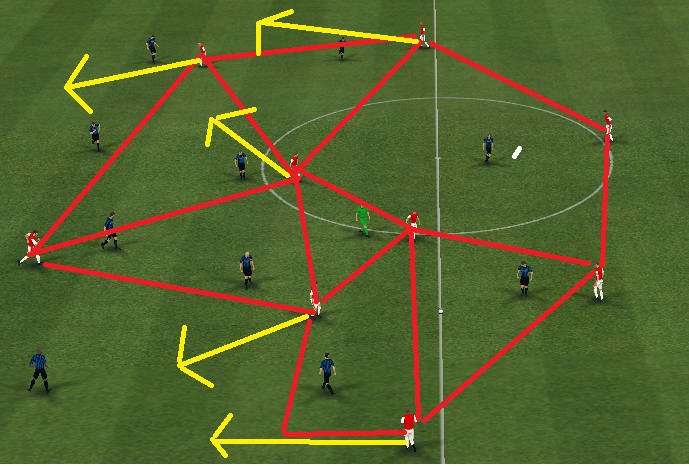
In a Total Football system, any outfield player can move into any position on the pitch, provided a teammate rotates to cover the space they leave behind. A full-back might surge forward into midfield; a striker might drop into defence. The formation on paper barely changes, because the team is constantly reorganising itself around wherever the ball happens to be.
Why it demanded a different kind of player
The system placed enormous demands on every individual. A defender needed enough technical ability to play a midfielder's passes; a forward needed the tactical discipline to track back and defend when the shape required it. This is part of why Total Football was so difficult for other nations to directly copy — it required a squad developed from youth level with that positional versatility already built in, not a tactic that could simply be installed over a weekend.
The legacy in modern coaching
The direct influence of Total Football is still visible today, most clearly in the emphasis modern academies place on positional intelligence — teaching young players to understand space and rotation rather than memorising a single fixed role. Many of the possession-based systems that dominated European football in the 2000s and 2010s trace their coaching lineage back to ideas first developed by Dutch coaches in the 1970s, even where the on-pitch formation looks quite different.
What makes the story remarkable is scale: a footballing nation with a relatively small population produced a tactical idea that reshaped how much larger footballing countries develop players, decades after the original teams that popularised it had retired.