Pressing is often described to casual fans as simply 'working hard' — chasing the ball more than the opponent. In elite football, it is closer to the opposite of chaos: a coordinated trap designed to force a mistake in a specific area of the pitch.
Pressing triggers
Teams rarely press constantly for 90 minutes; doing so would be physically unsustainable. Instead, coaches drill specific pressing triggers — moments that tell the whole team to press together, such as a poor first touch, a backwards pass, or the ball being played to a weaker-footed defender. Recognising the trigger and reacting as a unit is what separates organised pressing from players simply running at the ball individually.
Cutting off passing lanes, not just chasing the ball
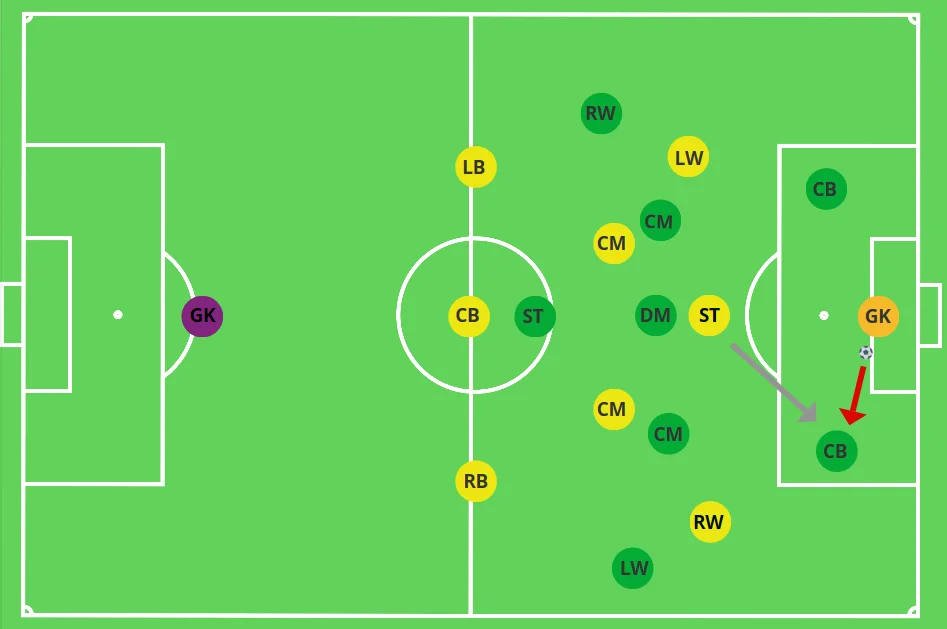
The player closest to the ball rarely presses in a straight line. Instead, they typically curve their run to cut off the easiest pass while showing the opponent toward a weaker option — often the touchline, where there is less space to escape into. Behind that first presser, teammates simultaneously shift to block the next two or three passing options, so that even if the first press is beaten, the ball carrier still has nowhere obvious to go.
The risk side of the trade
Pressing high up the pitch means committing players forward, which leaves space in behind the defensive line. If the press is broken — through a quick one-touch pass or a long ball over the top — the pressing team can be exposed to a fast counter-attack with fewer defenders in position. This is why the best pressing teams pair the tactic with an offside trap or a covering sweeper-keeper, reducing the danger of the space left behind.
Why fitness data changed the tactic
The rise of high pressing as a mainstream tactic in the 2010s wasn't purely a coaching innovation — it was also enabled by advances in sports science. GPS tracking data let coaches understand exactly how much high-intensity running a squad could sustain, and substitution patterns evolved specifically to keep pressing intensity high for a full 90 minutes rather than fading badly after an hour.