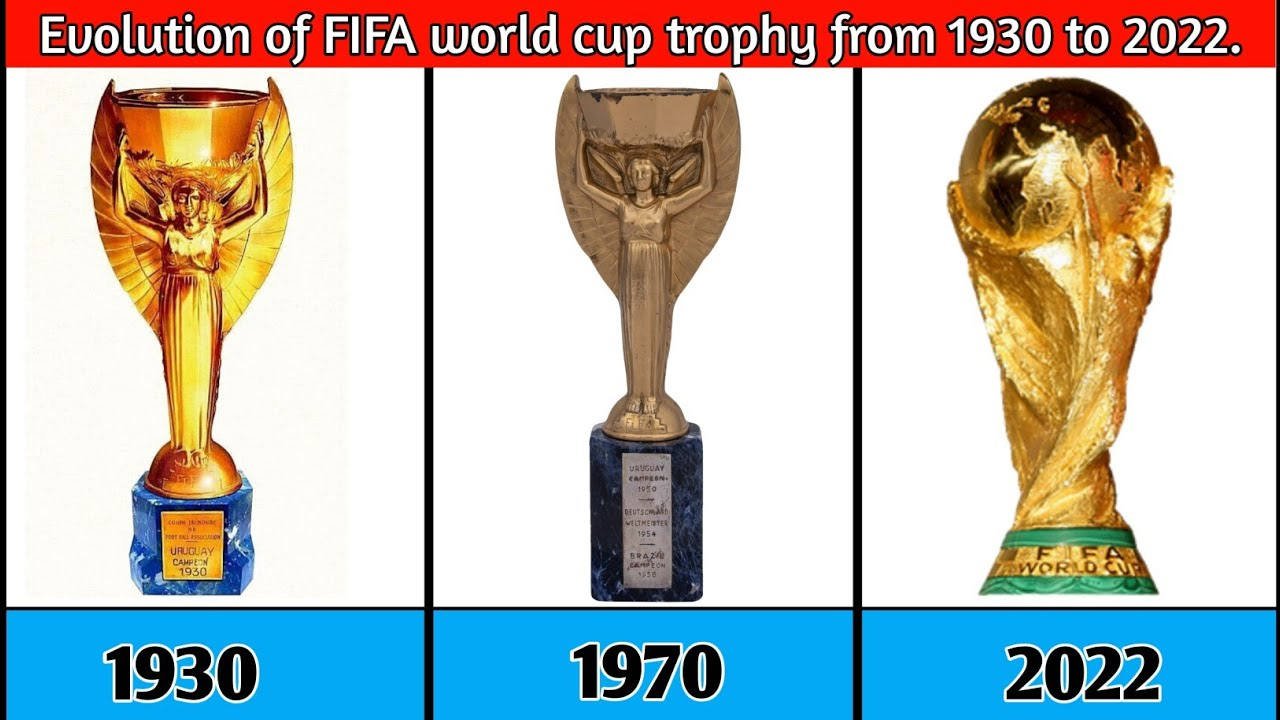
When Uruguay lifted the first World Cup in 1930, the trophy they held was not the golden figure fans recognise now. It was the Jules Rimet Trophy, a silver-gilt statuette of the Greek goddess Nike, standing barely 35 centimetres tall and weighing under four kilograms. It was named after the FIFA president who pushed the tournament into existence, and for the next four decades it travelled the world in increasingly dramatic circumstances.
A trophy that went missing twice
The Jules Rimet Trophy survived the Second World War hidden in a shoebox under the bed of an Italian federation official, who feared it would be melted down or seized. It later vanished again in 1966, stolen from a public exhibition in London just months before the tournament England would go on to host and win. A dog named Pickles found it wrapped in newspaper under a garden hedge a week later, an episode football historians still treat as one of the sport's odder footnotes.
Brazil's third World Cup win in 1970 meant they kept the trophy permanently, as the rules of the time allowed. It did not stay safe for long: the trophy was stolen from the Brazilian football confederation's headquarters in 1983 and has never been recovered, widely believed to have been melted down for its gold.
The trophy fans know today
FIFA commissioned a replacement ahead of the 1974 tournament. The new FIFA World Cup Trophy, designed by Italian sculptor Silvio Gazzaniga, depicts two human figures holding up the Earth at the moment of victory. Unlike its predecessor, this trophy is never given away outright — winners receive a gold-plated replica, while the genuine 18-carat gold original returns to FIFA after every final, engraved with the year and champion.
That solid gold core is also why the trophy is handled so carefully during ceremonies. At just over 6 kilograms, it is heavier than it looks, and years of images showing captains struggling to lift it one-handed are not staged for effect.
Key facts:
- The original Jules Rimet Trophy was retired after Brazil's third title in 1970
- The current trophy has been awarded since the 1974 tournament
- Winners keep a gold-plated replica, not the original
The trophy's design has, in its own quiet way, tracked the tournament's growth — from a modest statuette contested by 13 teams in Uruguay to a global symbol chased by more than 200 national federations today.